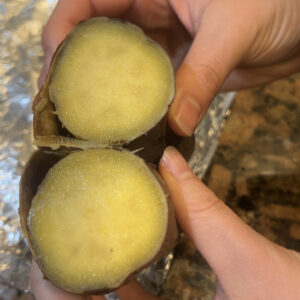
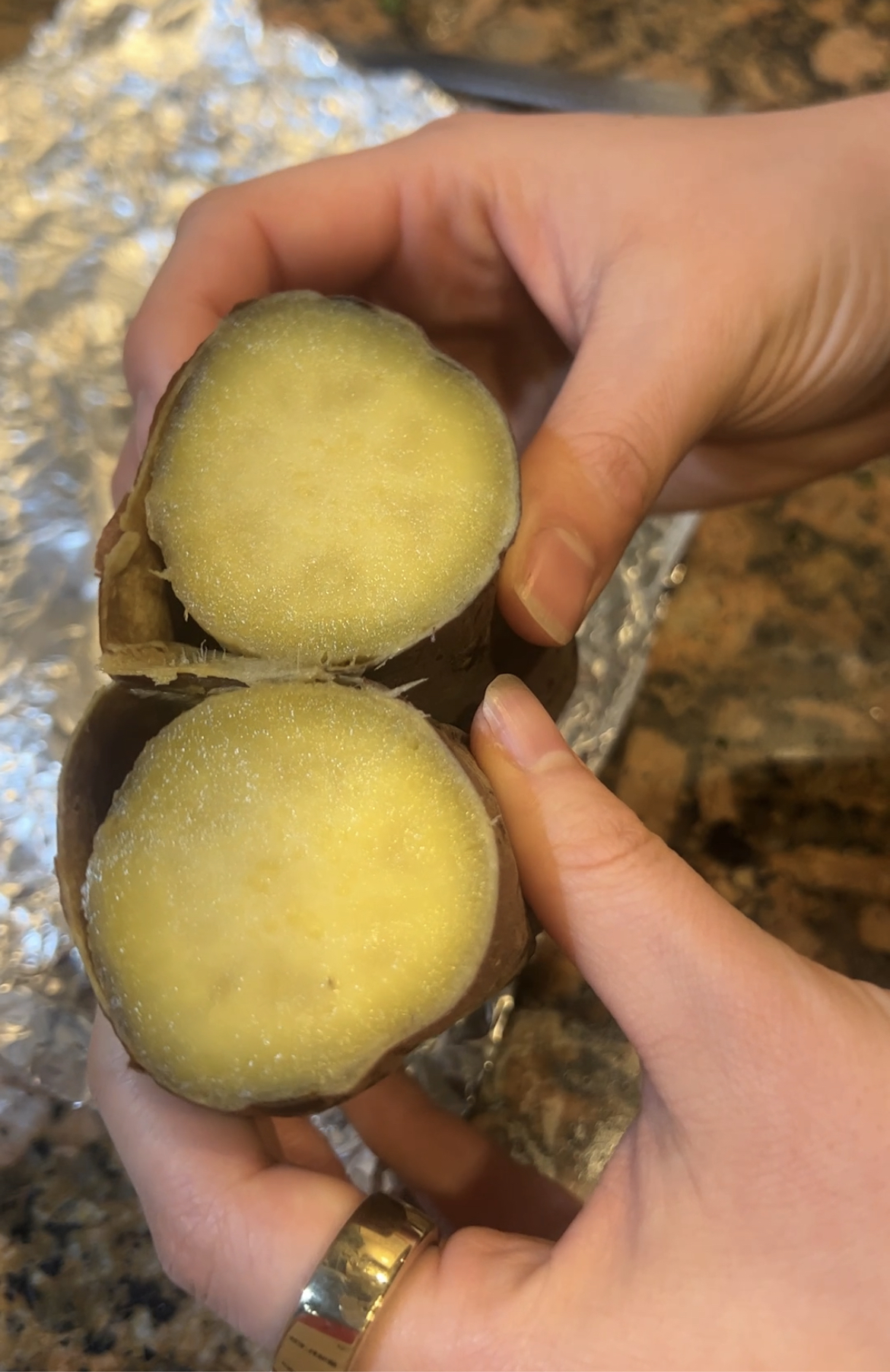
I guarantee that every single person in Japan can sing the yakiimo truck song if you ask them to! The smell of the slow roasted Japanese sweet potato + the song playing in the background = fall/winter in Japan!
YAKI means to cook/bake and IMO means potato!
When it starts to get colder in Japan, I find myself walking out with a yakiimo whenever I go buy anything at Don Quijote in Japan (the most overwhelming but incredible store that sells anything you could ever imagine lol). They have a machine in their entrance where you can smell them slow roasting the Japanese sweet potatoes over the hot stones and it’s DIVINE.
The full name of the sweet potatoes you can buy from the trucks in Japan or in the supermarkets is “ishi-yakiimo“. “Ishi” means stone because traditionally, they bake Japanese sweet potatoes on hot stones. The heat of the hot stones slowly cooks the sweet potatoes — the key is how long the sweet potatoes are held between the degrees of 65C – 80C.
Not all sweet potatoes are created equal! Here are two of the best varieties for making the creamiest, most flavorful Japanese-style roasted sweet potatoes:
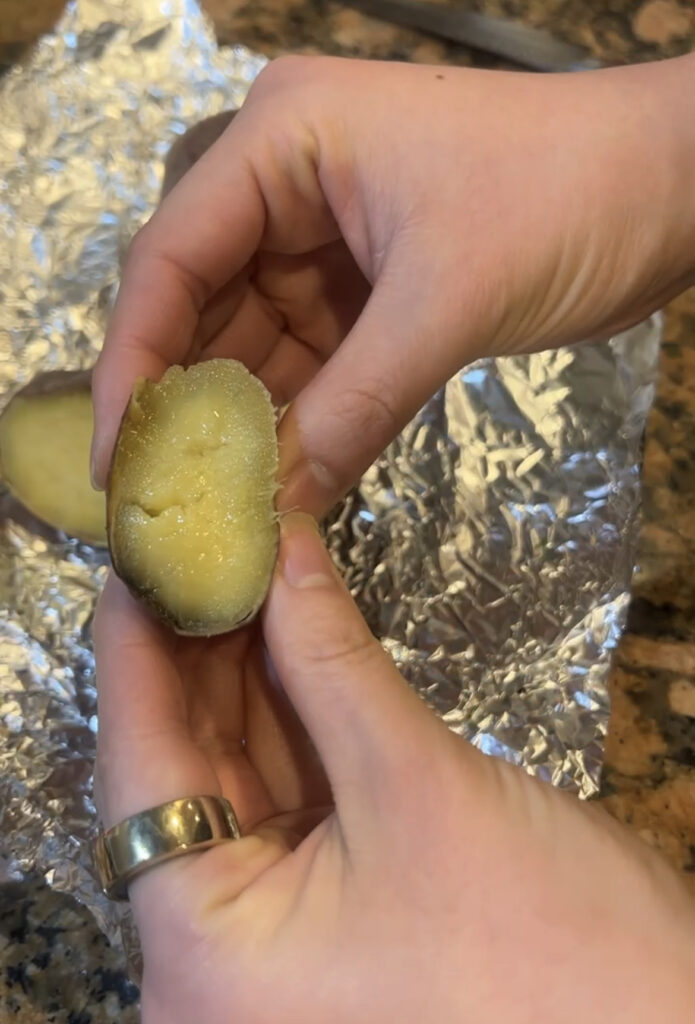
Baking Time Tip: If your sweet potatoes are larger, bake them for at least 90 minutes for the perfect texture.
Let me take a step back and explain the science behind why these sweet potatoes get SO sweet just by baking them!
Food enzymes are quite amazing. I am currently studying to get my food fermentation license and have been studying on food enzymes, especially in Japanese food. I learned about amylase which is an enzyme that is naturally in sweet potatoes. When you cook sweet potatoes, the amylase enzyme turns the starches into sugar which is why it’s so sweet!
You might find that depending on how you cook the sweet potatoes, you can get them to be even SWEETER!
Amylase is most active between 65°C–80°C (149°F–176°F), meaning that when sweet potatoes are cooked at this temperature, their starches convert into sugar, creating that signature caramelized sweetness.
This makes the sweet potato baking process SO much easier because all of you have to do is pop it into the oven and bake!
NOTE: Depending on the size of your sweet potatoes and the type of Japanese sweet potato, the silkiness of the potatoes will change! If your sweet potatoes are a little bit larger, you may need to bake them for 90 minutes.
✔ 2–3 Japanese sweet potatoes (Beni Haruka or Silk Sweet)
✔ Water (for soaking paper towels)
✔ Aluminum foil
1. Wash all of your sweet potatoes thoroughly (especially the ends where there may be dirt on it). I like to scrub with a brush to get all of the dirt off.
2. Without drying off the sweet potatoes (since it adds moisture) wrap the sweet potatoes in a paper towel and quickly run water over the paper towel again to make it wet. If it’s DRIPPING with water, I recommend lightly wringing it out just enough so that you don’t have a puddle of water.

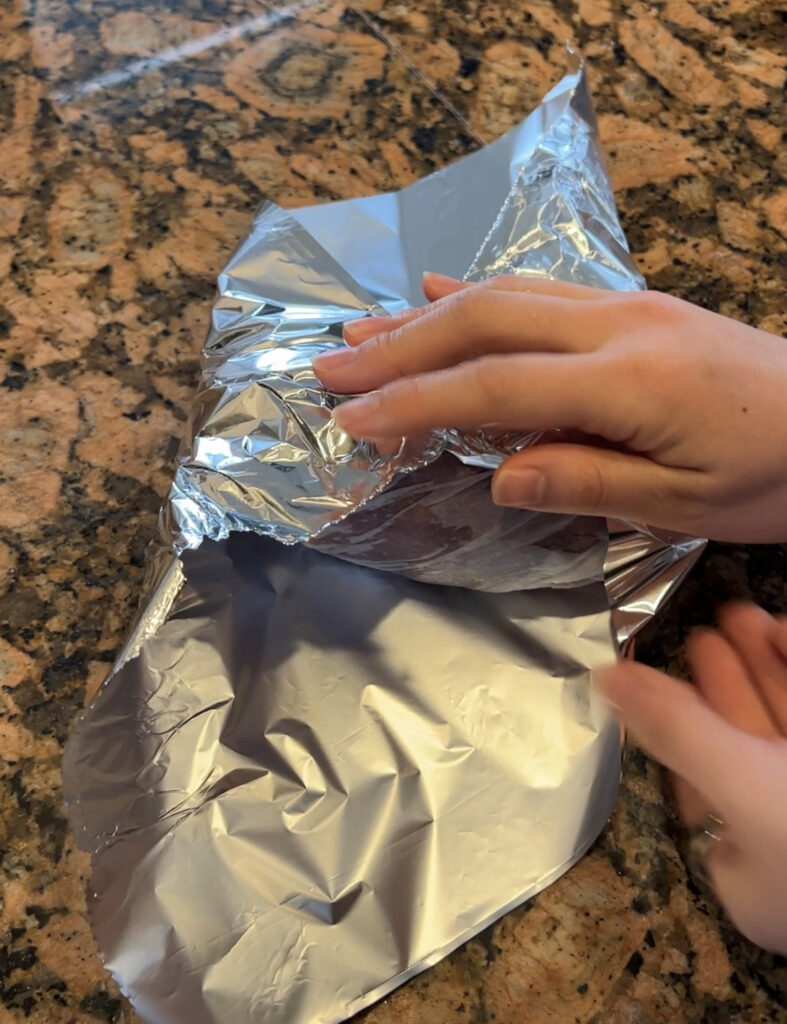
3. Wrap the wet sweet potato and paper towel in a large piece of aluminum foil so that the sweet potato is completely covered.

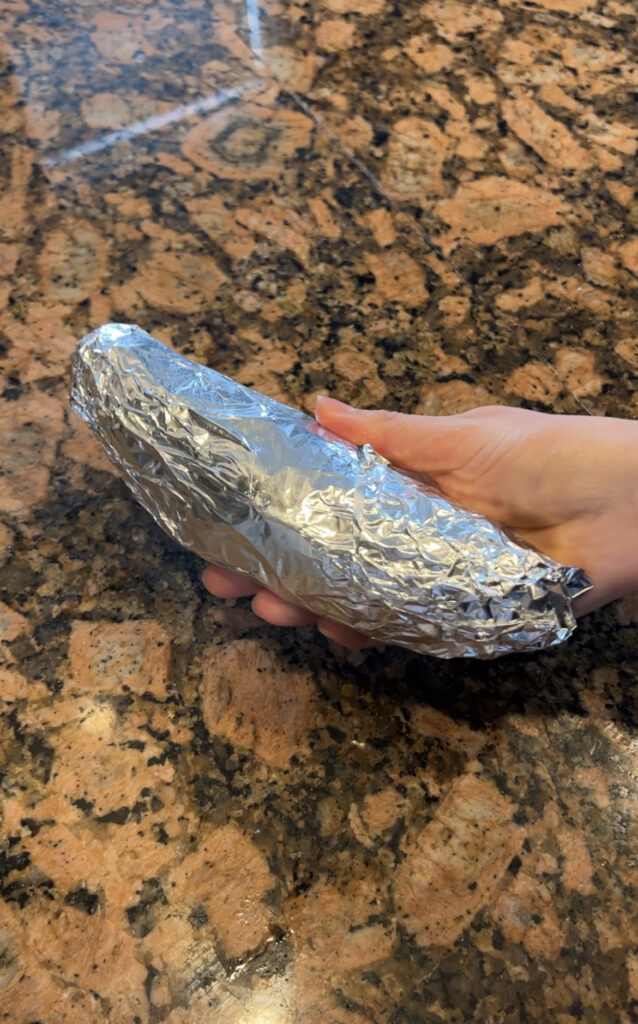
4. Place the Japanese sweet potatoes onto a baking dish and place it into your oven.
5. Turn on your oven and set it to 160C or 320F. While your oven heats up with the sweet potatoes inside, it will give your sweet potatoes a good enough time to stay in the 65C – 80C range and get them EXTRA sweet!
6. Once your oven has preheated, set your timer for 90 minutes.
7. After 90 minutes, leave your sweet potatoes in the oven for at least 30 minutes to let it cool down to the ideal range again. This step is crucial in ensuring you get a silky smooth baked Japanese sweet potato.
8. Once your Japanese sweet potatoes are cool enough to touch, you are ready to enjoy!
I love to eat them a little warm because they are already so sweet and creamy, but you can also add a little butter and cinnamon for an extra cozy bite!
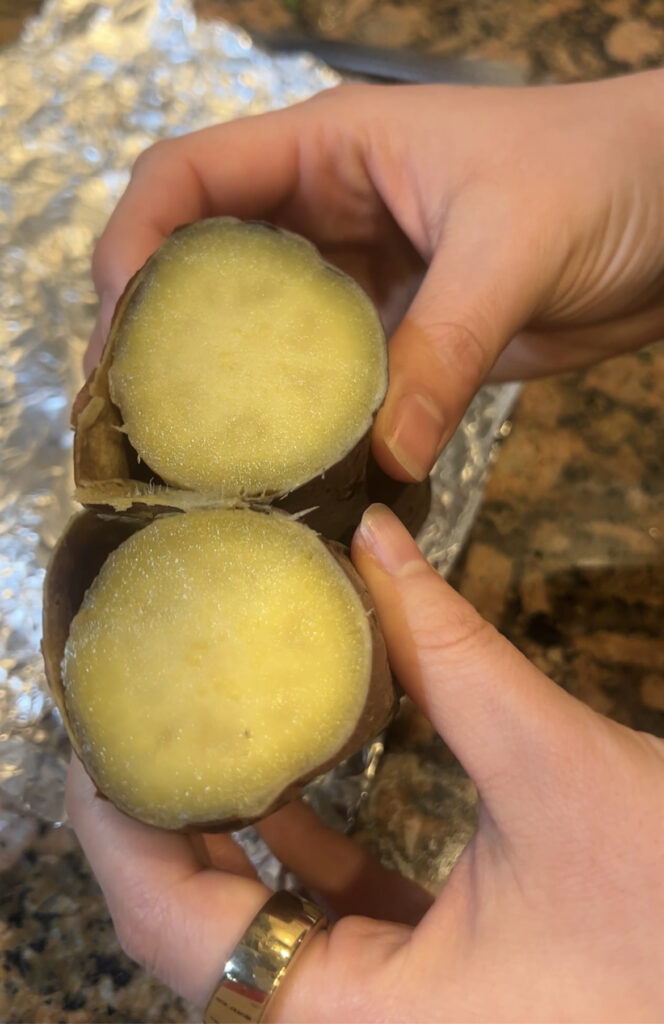
Did you know that cold Japanese sweet potatoes taste a bit different from freshly baked ones?
Chilled yakiimo have a custard-like texture, making them a unique, naturally sweet snack!
If you have leftovers, wrap them up and refrigerate overnight. The next day, enjoy a cold, silky-smooth yakiimo that tastes almost like sweet potato pudding!
If you try this Japanese yakiimo recipe, tag me @takahasheats on social media—I’d love to see your creations! 🍠💛
Now that you know how to make Japanese roasted sweet potatoes at home, you can enjoy the delicious taste of fall and winter in Japan anytime!
Itadakimas!